
Case Studies
Early adoption is helping build the evidence base for measurable efficiency gains, improved workflows, and stronger forensic outcomes.
Early adoption building the basis for measurable efficiency gains
Since the release of BlindSite Scene Multi-Evidence in September 2025, early adoption has helped establish a growing foundation for evaluating efficiency, workflow improvements, and forensic effectiveness in operational settings.
These case studies show how organisations are beginning to apply the technology in real environments, helping to assess its impact on evidence recovery, time at scene, and wider investigative outcomes.
Table of contents
C-MATT / CATPA
Part of the Colorado Auto Theft Prevention Authority, United States
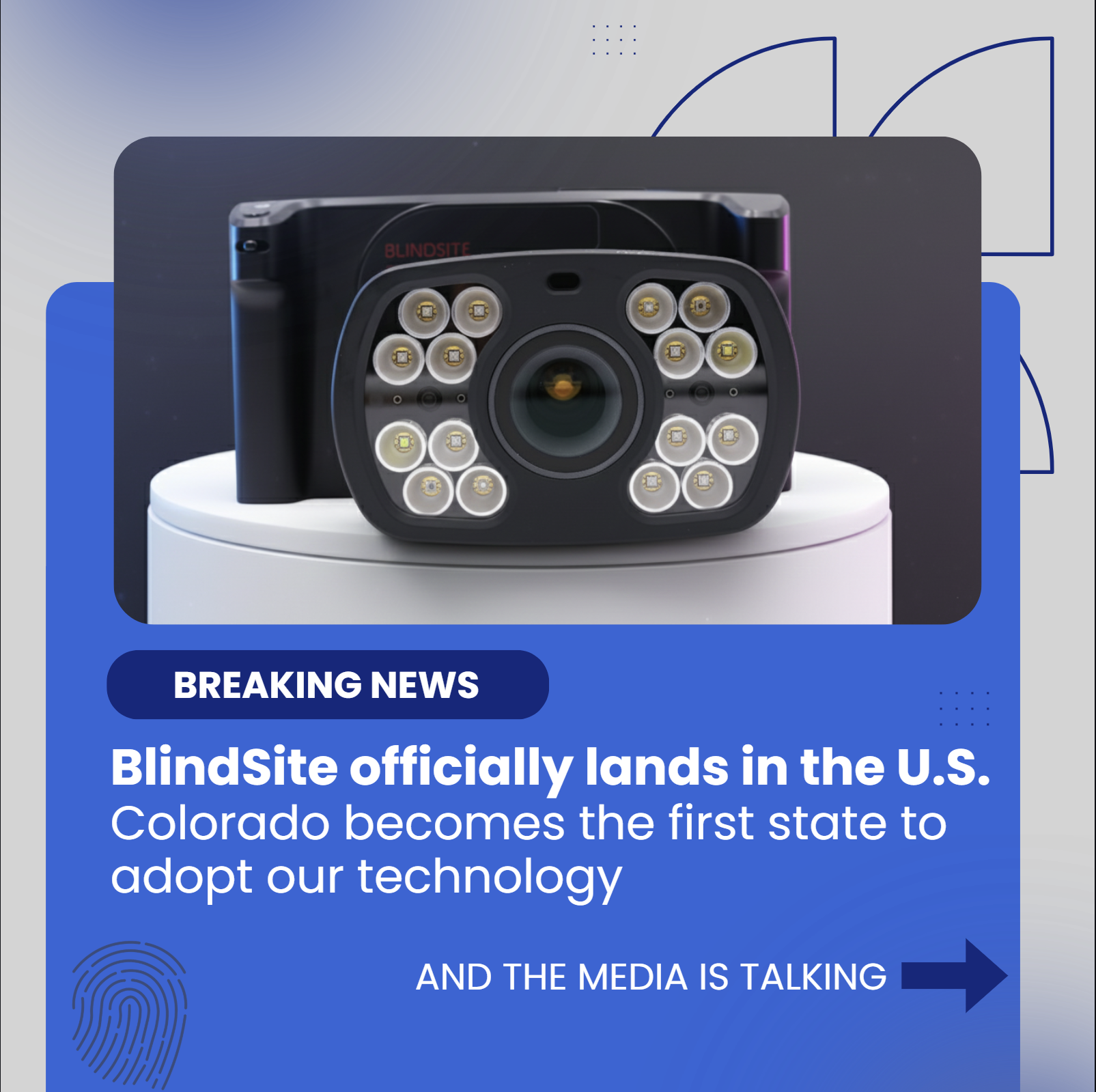
BlindSite has been fully adopted and deployed across the task force to support evidence recovery processes in auto theft investigations. Their focus is on improving workflows, reducing time at scene, increasing recovery success, and strengthening prosecution outcomes.
“I was able to use the infrared to assist Denver with taking some photographs of tattoos on an unidentified male. He was badly decomposed, and we were able to get some clear images of tattoos on the body that were not very clear or visible to the naked eye. Hopefully, the images will help to identify the deceased male, and they were very happy to get some quality images of the tattoos.”
Investigative Technician
C-MATT, Lakewood Police Department
Watch short overview
Queensland Police and Australian Defence Force
Australia
Queensland Police and the Australian Defence Force adopted BlindSite Scene Multi-Evidence to support traditional crime scene workflows, with the aim of increasing both the volume and quality of collected evidence.
As part of this collaboration, an independent study was carried out to compare hyperspectral imaging with conventional multispectral imaging for the visualisation of latent fingermarks across a range of surfaces. The results were presented at ANZFSS in October 2025 and provide an important point of validation for the capability.
Fingermarks were deposited and left for one week before testing, and imaging was carried out perpendicular to each surface.
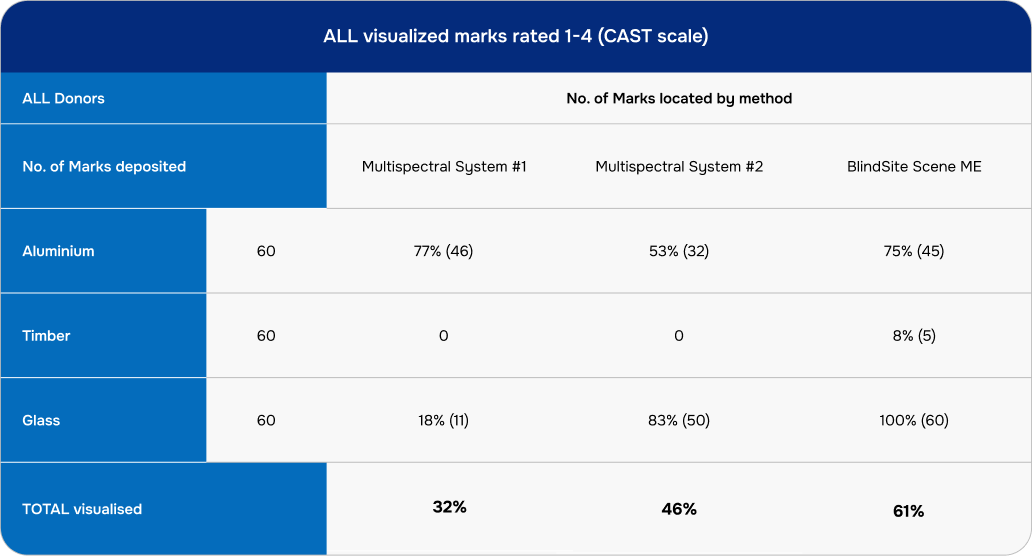
BlindSite visualisation significantly outperforms the previous leading multispectral systems on the market.
BlindSite can also be used at an angle to obtain better results, for example on timber, while other systems can only be used at 90° to the surface.

